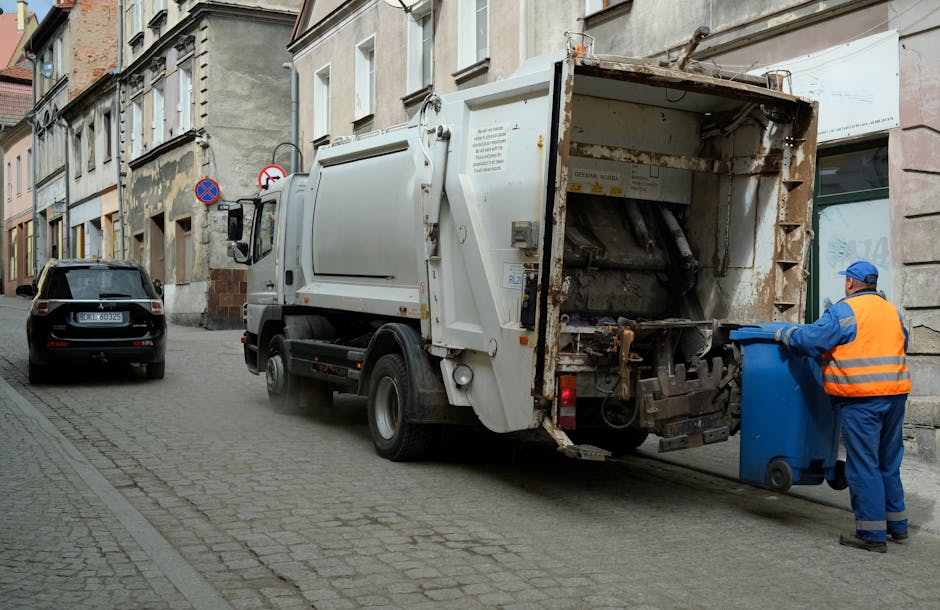
Erith High Street guide to rubbish removal services
If you are trying to clear rubbish in or around Erith High Street, you probably want two things: a service that turns up when it says it will, and a process that does not create more stress than the mess itself. That is really what this Erith High Street guide to rubbish removal services is here to help with. Whether you are dealing with a single bulky item, a post-refurbishment pile, or a full property clear-out, the right approach can save time, reduce hassle, and keep you on the right side of waste rules.
Truth be told, rubbish removal sounds simple until you are standing in front of a packed hallway, a broken wardrobe, and a fridge you cannot shift on your own. Then it becomes a planning job. This guide walks through how rubbish removal works, who it suits, what to watch for, and how to choose the most practical option for your situation.
Table of Contents
- Why Erith High Street guide to rubbish removal services Matters
- How Erith High Street guide to rubbish removal services Works
- Key Benefits and Practical Advantages
- Who This Is For and When It Makes Sense
- Step-by-Step Guidance
- Expert Tips for Better Results
- Common Mistakes to Avoid
- Tools, Resources and Recommendations
- Law, Compliance, Standards, or Best Practice
- Options, Methods, or Comparison Table
- Case Study or Real-World Example
- Practical Checklist
- Conclusion
- Frequently Asked Questions
Why Erith High Street guide to rubbish removal services Matters
Rubbish builds up in ordinary life. A new sofa arrives and the old one has to go. A business refits its workspace and suddenly there are boxes, packaging, and broken fittings everywhere. A loft clear-out starts with good intentions and ends with a pile that looks larger by the hour. That is why a local rubbish removal service matters: it gives you a straightforward way to move waste off-site quickly, safely, and with less disruption.
Erith High Street is a practical, busy part of town, so convenience matters. Nobody wants sacks hanging around the pavement for days or a van blocking access while you try to juggle other plans. A good service helps you get the job done with minimal fuss. And if you are comparing disposal options, the difference between a quick collection and a drawn-out do-it-yourself trip can be surprisingly large once you factor in time, lifting, sorting, and the trip itself.
There is also a trust element. Waste needs to be handled properly, especially if it includes electrical items, furniture, or anything that could be considered hazardous. Reputable providers should be clear about what they can take, how they handle recycling, and what happens to the waste after collection. If you want a broader overview of disposal support, the main waste removal service page is a useful place to start, while the recycling and sustainability page explains the environmental side in plain English.
Expert summary: the best rubbish removal service is not just the fastest one. It is the one that matches the type of waste, fits the access on the day, and leaves you confident it was handled properly.
How Erith High Street guide to rubbish removal services Works
Most rubbish removal services follow a simple sequence, although the details vary depending on the provider and the type of waste. In general, the process starts with a description of what needs removing. That might be a few bin bags, a mattress, old office chairs, garden cuttings, or a mixed load after a renovation. Photos often help, especially when access is tight or the volume is hard to judge by eye.
After that comes the quote or price estimate. Some jobs can be priced from a description, while others are better assessed on arrival. The main thing is clarity. You want to know whether the price is based on volume, item type, labour, or disposal category. If the service includes loading, sweeping up, and responsible disposal, say so. It is far better to ask early than to be surprised later. Nobody enjoys a hidden extra fee; it is one of those tiny things that ruins an otherwise decent day.
On the collection day, the team usually arrives, confirms the load, and removes the waste. Depending on the job, this might mean carrying items from inside a property, lifting from a garage, or clearing waste from a frontage or access point. For bulky items, specialist help can make a big difference. If you are dealing with large household items, the furniture disposal and mattress and sofa disposal pages show the sort of items that are often best handled as dedicated collections rather than general rubbish.
Once collected, waste is typically sorted for reuse, recycling, or disposal. Good providers will make reasonable efforts to separate recyclable material from residual waste. That matters not just for the environment, but because mixed loads are often handled more efficiently when they have been planned well from the start.
Key Benefits and Practical Advantages
The first benefit is obvious: less clutter. But there is more to it than that. Rubbish removal gives you space to work, think, and breathe again. In a home, that might mean opening up a hallway or finally using a spare room for something other than storage. In a business, it might mean getting back to normal trading faster after a refit or stock purge.
Here are the practical advantages people usually notice most:
- Speed: collections can usually be arranged far faster than filling and waiting on a skip.
- Labour saved: you do not have to move everything yourself to the kerb or load a vehicle.
- Less disruption: especially useful where parking or access is awkward.
- Better handling of bulky waste: sofas, appliances, and awkward pieces are much easier to manage with help.
- Clearer disposal route: responsible services separate items appropriately where possible.
Another advantage is flexibility. Not every job needs a full clearance. Sometimes it is just a garage full of leftovers, sometimes a loft clearance after years of boxes, and sometimes a simple appliance pickup. The right service should scale to the job rather than forcing you into a bigger solution than you need. If you are clearing different parts of a property, related services such as garage clearance, loft clearance, and home clearance can be a better fit than a one-size-fits-all approach.
And, let's face it, the peace of mind matters too. Once the waste is gone, the job stops living in the back of your mind. That has value. Real value.
Who This Is For and When It Makes Sense
This kind of service suits a wide range of people. Homeowners use it after decluttering, renovation, moving house, or dealing with inherited items. Landlords and letting agents often need quick turnaround between tenancies. Businesses use it to clear office furniture, archived materials, packaging, and fit-out waste. Tradespeople and contractors may need support with building debris, mixed rubble, and strip-out materials.
It also makes sense when time, access, or lifting capacity are limited. If you are on a tight schedule, or if the items are too heavy or awkward to move safely, a professional clearance can save you from a nasty strain or a long weekend of sorting. One customer-style scenario we see often is a family trying to clear a property after a relative has moved into care. The emotional load is already heavy enough without wrestling with an old wardrobe down a narrow staircase.
It is also a good option when the load contains mixed waste that would be messy to sort alone. Builders' offcuts, packaging, and old fixtures can be a headache, especially if you are not sure what can go where. For renovation and construction leftovers, the builders waste clearance service is often more appropriate. For business premises, business waste removal or office clearance may be the more sensible route.
One useful rule of thumb: if the waste is taking up usable space, creating a safety issue, or stopping work from moving forward, it is probably time to act.
Step-by-Step Guidance
If you want the process to go smoothly, it helps to approach it in a calm, ordered way. A rushed collection is where avoidable problems tend to appear. Here is a practical method that works well.
- Separate what needs removing. Walk through the space and decide what is going, what is staying, and what needs special handling.
- Identify bulky or awkward items. Sofas, fridges, wardrobes, and appliances may need special care or lifting support.
- Check for restricted waste. Some items need extra attention, especially if they are classed as hazardous or contain sensitive material.
- Take clear photos. A quick picture often helps explain access, volume, and item type far better than a rushed phone description.
- Ask for the basis of the quote. Make sure you understand what is included: labour, loading, disposal, and any possible surcharges.
- Prepare access. Move cars if needed, unlock gates, and clear a path where possible.
- Confirm timing. A collection window is useful, but a precise arrival update is even better when your day is already full.
- Keep the job site simple. The cleaner the setup, the quicker the collection usually goes.
When the items are especially large, it can help to use a specialist service instead of bundling everything together. Fridges and freezers, for example, are a different proposition from general household junk. The same goes for a sofa that has seen better days. If that sounds familiar, look into fridge and appliance removal and mattress and sofa disposal rather than treating them as ordinary rubbish.
Small thing, but important: keep doors open only when safe to do so. The fewer awkward corners and last-minute surprises, the better.
Expert Tips for Better Results
The best results usually come from better information, not bigger effort. If you can describe the job accurately, the provider can plan the right team size, vehicle space, and timing. That alone can make the difference between a clean, efficient collection and a slightly chaotic one.
Tip one: group similar items together before collection. This does not mean sorting every scrap into perfection. It just means placing furniture, general waste, cardboard, and specialist items in obvious clusters. It speeds things up and reduces confusion.
Tip two: be honest about access. If there is a narrow stairwell, limited parking, or a long carry distance, say so early. It is better to sound overly cautious than to spring an unexpected obstacle on collection day. Nobody wins that game.
Tip three: ask how mixed loads are handled. If you are clearing out a loft or garage, you may have wood, metal, cardboard, textiles, and general rubbish all in one place. A provider with a good recycling process should be able to explain their approach in simple terms. You do not need a lecture. Just clarity.
Tip four: use related services where they make the job neater. A full property clear-out may be better split into stages, such as house clearance for indoors and garden clearance for outdoor waste. That can keep the job organised and reduce delays.
Tip five: keep a short notes list on your phone. Item count, access notes, and anything unusual. It sounds a bit fussy, but a simple note can save time when you are juggling work, family, or a move.
Common Mistakes to Avoid
People usually do not get rubbish removal wrong because they are careless. They get it wrong because they are busy. That said, a few avoidable mistakes come up again and again.
- Underestimating the volume: what looks like "a small pile" often turns out to be much more once it is lifted and stacked.
- Leaving access until the last minute: blocked entrances, parked cars, or locked gates can delay the whole job.
- Mixing general waste with special items: appliances, electronics, and potentially hazardous materials should be flagged early.
- Assuming everything can go together: some items need different handling, and that is normal.
- Choosing on price alone: the cheapest option is not always the best value if it leads to delays or unclear disposal.
- Forgetting paperwork or sensitive contents: office clear-outs often include documents that need secure handling.
One of the more common problems is simply leaving everything until the day of a move, builder visit, or inspection. That creates pressure. Then you are making rushed decisions about items you have lived with for years. Not ideal. A little planning goes a long way.
If you are clearing business premises or paperwork-heavy spaces, consider whether confidential shredding should be part of the plan. It is one of those things people forget until the box of old records is sitting by the door.
Tools, Resources and Recommendations
You do not need specialist equipment for every job, but a few simple tools can make preparation easier. Heavy-duty bags, gloves, a torch for lofts or garages, and a tape measure for awkward furniture can all help. If you are trying to work out whether something will fit through a doorway or down stairs, a quick measurement saves a lot of guessing.
For guidance on what can and cannot go with certain waste streams, the page on what can go in a skip is a useful reference point, even if you are not using a skip. It helps you think through the kind of waste you have and whether it needs different handling. Likewise, the pricing and quotes page is helpful when you want a sense of how jobs are usually priced and what details are likely to matter.
If safety is a concern, read the provider's insurance and safety and health and safety policy pages before booking. They tell you a lot about how the business thinks. Not every website does this clearly, so when you find one that does, take the hint.
For customers who like to book quickly, an online booking option can be handy. If you are ready to move, the book online page is the most direct route. If you still need to clarify the details, the about us page can also give you a better feel for the company behind the service.
Law, Compliance, Standards, or Best Practice
Waste removal in the UK is not just a matter of convenience. There are legal and practical responsibilities around how waste is transported, sorted, and disposed of. You do not need to become a compliance expert, but you should expect any serious provider to take duty of care seriously and to handle waste in line with applicable UK practice.
In plain terms, that means a proper service should be able to explain what happens to the waste after collection, where responsibility sits, and how potentially risky items are managed. For example, anything that may be hazardous needs careful handling. If your job includes materials that are not safe to mix with general rubbish, the dedicated hazardous waste disposal information is worth reviewing before you book.
Best practice also includes clear pricing, safe lifting, sensible vehicle loading, and respectful treatment of the property. For business customers, record-keeping matters too. If you are clearing an office or commercial unit, you want a service that can work tidily, avoid disruption, and support your own compliance obligations. That is where a proper office clearance or business waste removal arrangement becomes more than a convenience; it becomes part of operational housekeeping.
One gentle caution: if you are unsure whether a particular item is accepted, ask before collection. Guessing is how problems start. Better a short question than a wasted visit.
Options, Methods, or Comparison Table
Different waste problems need different solutions. A skip is useful for some projects, but a man-and-van style removal service is often better for awkward access, one-off bulky items, or jobs where you want everything gone in a single visit. The right choice depends on volume, access, and how much lifting you want to do yourself.
| Option | Best for | Pros | Trade-offs |
|---|---|---|---|
| Rubbish removal collection | Mixed waste, bulky items, quick clear-outs | Fast, flexible, little lifting for you | May cost more for very large volumes |
| Skip hire | Ongoing DIY projects and predictable waste | Good for repeated loading over time | Needs space and you often do the loading |
| Specialist item disposal | Appliances, mattresses, sofas, sensitive items | Better handling of specific waste types | Not ideal for all-purpose clearances |
| Full property clearance | Homes, flats, garages, lofts, estates | Comprehensive and organised | May be more than you need for a small load |
If you are weighing up skip hire against collection, think about access first. A skip can be awkward where parking is tight or permits are a concern. A collection service is often simpler if you want the waste removed from inside the property. For a better sense of skip-related limits, the what can go in a skip guide is useful even if you ultimately choose a different route.
Case Study or Real-World Example
Imagine a small property close to Erith High Street where a family is clearing a front room, a loft, and a few bulky items before redecorating. There are two chairs that have seen better days, a broken chest of drawers, several bags of mixed waste, an old microwave, and some cardboard from recent deliveries. None of it is dramatic on its own. Together, though, it is awkward.
Rather than trying to sort the lot into a car over two or three trips, the family takes photos, notes the access, and books a collection. On the day, the team removes the furniture first because it is the most awkward, then clears the mixed bags and smaller items. The microwave is separated for appropriate handling. The cardboard is dealt with sensibly rather than tossed in with everything else. The room is left usable again, and the family can actually start decorating that evening. Small win, but a real one.
That kind of job is common. It is not usually about huge mountains of waste. It is about a few bulky, annoying, space-hogging items that slow everything down. And once they are gone, the whole property feels lighter. You know the feeling.
Practical Checklist
Use this checklist before booking a rubbish removal service. It keeps things simple.
- List the items or waste types that need removing.
- Separate bulky items from general rubbish.
- Check whether anything needs special handling.
- Take a few photos for a clearer quote.
- Measure awkward furniture if access is tight.
- Confirm whether access is via stairs, lift, alley, or frontage.
- Make sure parking or collection access is possible.
- Ask what is included in the price.
- Clarify timing and arrival window.
- Keep a note of any sensitive or confidential material.
- Choose a service that can explain recycling and disposal clearly.
If your job is more specialised, you may want to use a dedicated service page rather than treating it as general waste. For example, garden waste, garage contents, and house clearances often work best as distinct jobs. That keeps the booking cleaner and usually makes the collection smoother too.
Get a free quote today and see how much you can save.
Conclusion
The best rubbish removal service for Erith High Street is the one that fits the real shape of your job: the type of waste, the access, the urgency, and the level of support you need. When those details line up, the process feels straightforward rather than stressful. And that is the real aim here.
Whether you are clearing a flat, an office, a loft, or just a few stubborn bulky items, a little planning will make a noticeable difference. Be clear about what needs removing, ask sensible questions, and choose a provider that values safe handling and responsible disposal. Simple enough on paper, but it matters in practice.
Once the mess is gone, the room changes. The air feels different. The job is finally finished. That is a good moment, honestly, and one worth getting to without the usual headache.
Frequently Asked Questions
What does rubbish removal usually include?
It usually includes the collection, loading, and disposal of unwanted items or waste. Some services also include sorting, sweeping, and removal from inside the property, but always check what is covered before booking.
Is rubbish removal better than skip hire?
It depends on the job. Rubbish removal is often better for bulky items, awkward access, and quick clear-outs. Skip hire can suit longer projects where you want to load waste gradually. Both have their place.
Can I get rid of furniture through a rubbish removal service?
Yes, often you can. Sofas, chairs, tables, wardrobes, and other large pieces are commonly handled through dedicated furniture disposal or furniture clearance services.
What should I do with old appliances?
Appliances such as fridges, freezers, and microwaves should be flagged early because they may need special handling. A dedicated appliance removal service is usually the safest option.
Do I need to sort everything before collection?
Not perfectly, but a bit of organisation helps. Grouping items by type and separating anything unusual makes the collection faster and reduces the chance of confusion.
How do I know if my waste is hazardous?
If it includes chemicals, sharp residues, contaminated materials, or anything you are unsure about, treat it as a potential hazard and ask before booking. Do not mix questionable items into general waste.
Will the team collect waste from inside my property?
Often yes, but this depends on the service and the layout of the property. If there are stairs, narrow hallways, or limited access, mention it when arranging the collection.
How can I get a more accurate quote?
Clear photos, item counts, and honest access details usually help most. If the job includes bulky or specialist items, say so upfront rather than leaving it to chance.
Is rubbish removal suitable for offices and businesses?
Yes. Office furniture, archived materials, packaging, and general commercial waste can often be removed through business waste removal or office clearance services.
What happens to the waste after it is collected?
Reputable providers usually sort the load for reuse, recycling, or disposal, depending on the material. If sustainability matters to you, ask how the business approaches recycling and responsible handling.
Can confidential papers go with general rubbish?
They should not. Sensitive documents are better handled through a confidential shredding service so they are destroyed appropriately.
How far in advance should I book?
For routine jobs, a short lead time is often fine. For larger clear-outs, busy periods, or time-sensitive removals, it is smarter to book as early as you can. That gives you more choice and less pressure.